- RoboRuby
- Posts
- Ruby AI News - February 11th, 2026
Ruby AI News - February 11th, 2026
AI Hearts Ruby

Matt Solt
February 11, 2026

Welcome to the 24th edition of Ruby AI News! This edition features the 2026 return of the Ruby AI meetup Artificial Ruby, the most important need to know AI news for Ruby developers, the “crazy unlock” of Rails + Claude Code, and much more.
I will be presenting Introduction to Generative AI Programming with RubyLLM on March 7th, 2026 at CultureWorks Greater Philadelphia, hosted by Wale Olaleye and RailsFever. The workshop covers basics such as building an interactive chatbot, text & image generation, transcription, and data extraction, through intermediate topics like tool calling and the Model Context Protocol, with further discussion on advanced concepts including Retrieval Augmented Generation for custom datasets, prompting strategies, cost optimization, monitoring, multi-agent systems, and deployment. The session runs from 10:00am to 1:30pm ET with networking, a presentation, and hands-on coding, designed for technical founders, software engineers, and students interested in AI integration.
Contents
Top Stories
Artificial Ruby is Back for 2026

The ArtificialRuby meetup is back for 2026 with its February edition on Wednesday, February 18th at Betaworks in New York City from 6 to 9pm. This month features two demos: Andrew Denta presenting "Realtime AI Agents in Ruby", walking through his open-source Pokemon-playing agent, and Valentino Stoll with "Chaos To The Rescue", a gem that uses RubyLLM to dynamically generate missing methods at runtime. Have something you want to share? There will be an open mic after the demos, as well as a happy hour and networking. If you haven’t joined yet, now is the time!
Artificial Ruby is a meetup for technologists and Rubyists, dedicated to creating "a community of developers defining Ruby's place in AI." Since launching in May of 2024, the meetup has grown into a monthly fixture in the NYC tech scene, with events hosted at Betaworks and sponsored by Def Method, Niva, Sublayer, OmbuLabs, and Whop. Past talks have covered everything from RAG deep-dives to AI-powered Slackbots to Hypermedia APIs for AI, with previous sessions available on RubyEvents and YouTube.
The organizer driving Artificial Ruby is Scott Werner, the CEO of Sublayer and prolific AI and Ruby developer, with contributions such as the Sublayer gem, a model-agnostic AI agent framework, Actions Per Minute, a command center for managing AI work, Augmentations.ai, an AI-powered code reviewer, and Protocollie.io, a shareware MCP management application.
Scott is on the cutting edge of AI thought leadership and one of the Ruby community's most visible voices on AI. He regularly presents at conferences and shares his knowledge on podcast appearances. His talk "We Were Voyagers. We Can Voyage Again!" made the rounds at Rocky Mountain Ruby, XO Ruby Chicago, and the ArtificialRuby meetup. He’s shared his vision for the future of Ruby AI on The Ruby AI Podcast, discussing Sublayer's architecture and promptable architecture, Dead Code, on his experimental HTML generation framework Monkey's Paw, Breaking Change with Justin Searls, for a conversation on what's happening to programming as a career, and Code and the Coding Coders who Code it with Drew Bragg on agentic coding tools and the origin story of Artificial Ruby.
Scott's newsletter Works on My Machine is essential reading for developers working with AI. His most popular post, "MCP: An (Accidentally) Universal Plugin System", argued that the Model Context Protocol was quietly becoming a universal plugin standard far beyond its original scope. "Nobody Knows How To Build With AI Yet" made the case that AI-assisted development is less like engineering and more like jazz: everyone improvising, nobody following sheet music. And "The Coming Knowledge-Work Supply-Chain Crisis" examines how AI is about to expose humans as the bottleneck in knowledge-work supply chains, with implications for how teams and organizations will need to restructure around AI-augmented workflows.
Recent posts really cut through the AI noise. "The Discovery Phase Is All There Is" argues that the current state of permanent change in AI is not a phase to get through but the new normal. "The Different Shapes of 'Think Before You Build' Prompting" lays out five concrete techniques for getting better results from LLMs. "What If We Took Message-Passing Seriously?" introduces prompt_objects, a Ruby gem where LLM-backed entities communicate via natural-language message passing, inspired by Alan Kay's Smalltalk vision. And "How Do You Speak Pidgin To A Probability Distribution?" makes the case that frameworks are shared vocabularies, not just pre-written code, introducing the VSM framework for building self-aware agent systems.
Every time Scott speaks, I come away with an entirely new viewpoint on the AI landscape that I hadn’t considered. He encompases the heart of Ruby, and recognizes unseen aspects of an AI-driven future that lend a different perspective I’m not hearing from anyone else. As Drew Bragg put it: when "Scott talks about using AI I come away with tons of new ideas. My workflow dramatically changed (and improved) after his talk.", while Travis Dockter said "I would ask the Oracle 'what makes a good blog post' and it would say 'Read what Scott Werner writes.'"
If you're interested in Ruby and AI, I highly recommend you subscribe to Scott’s Works on My Machine newsletter and join us at the next ArtificialRuby meetup on February 18th.
Need to Know AI News
Claude $50 Credit To celebrate the launch of Opus 4.6, Anthropic is giving away $50 of usage credits to subscribers. Go to the Claude AI usage page or use the /extra-usage slash command in Claude Code to claim your credits by February 16th.
Docker Sandboxes Docker announced disposable microVM-based execution environments for coding agents like Claude Code, Gemini CLI, Codex, and Kiro, providing hard isolation so agents can run unattended with full system access without affecting the host machine.
Claude Code Is the Inflection Point Doug O'Laughlin, Jeremie Eliahou Ontiveros, Jordan Nanos, Dylan Patel, and Daniel Nishball argued that Claude Code represents a pivotal moment in AI comparable to ChatGPT's launch, noting that 4% of GitHub public commits are already authored by Claude Code with projections reaching 20%+ by year-end. The article examined the broader threat to the $15 trillion information work economy and projected Anthropic will surpass OpenAI in quarterly revenue growth.
Agent Trace Cursor proposed an open standard for tracing AI-generated code in version-controlled codebases. The spec provides vendor-neutral, granular attribution at file and line levels to track which code was written by AI versus humans.
The Potential of RLMs Drew Breunig explored Recursive Language Models (RLMs) as a solution to context rot, where LLM performance silently degrades as context grows. RLMs separate tokenized from programmatic context by loading data into a coding environment and letting models interactively explore it, handling datasets without degradation.
How StrongDM's AI Team Build Serious Software Without Even Looking at the Code Simon Willison examined StrongDM's "Dark Factory" approach where AI agents produce and validate code without human review, using behavioral clones of third-party services and satisfaction metrics for probabilistic validation. The team spends roughly $1,000 daily per engineer on tokens and tests thousands of scenarios hourly against digital twins of APIs like Okta and Slack.
Pi: The Minimal Agent Within OpenClaw Armin Ronacher wrote about Pi, a minimal coding agent with just four tools (Read, Write, Edit, Bash) and no MCP that extends itself by generating its own plugins. Shopify CEO Tobi Lütke endorsed Pi as the most interesting agent harness, noting he had it spawn Claude Code in tmux and reverse-engineer its tasks system. Aakash Gupta highlighted that Pi powers OpenClaw, which reached 145,000 GitHub stars in a single month, beating VC-funded agent frameworks with four system calls and a package manager.
QMD Tobi Lütke shipped updates to QMD, his local markdown search MCP server, adding a fine-tuned query expansion model, GEPA-optimized synthetic training data, and semantic chunking. Jared Palmer praised the combination of Compound Engineering's workflow:compound agent with QMD, while Andrew Levine shared a clawdbot that uses QMD for private knowledge base search with hybrid BM25 + local embeddings to token consumption by 95%.
How to Make Your Agent Learn and Ship While You Sleep Ryan Carson described a nightly automation loop where an AI coding agent reviews the day's threads, extracts learnings into persistent AGENTS.md files, then picks the top priority from a backlog and ships a PR while you sleep. The setup combines Compound Engineering, Compound Product, and Ralph to create a self-improving cycle where patterns discovered each day inform the next day's work.
Announcements
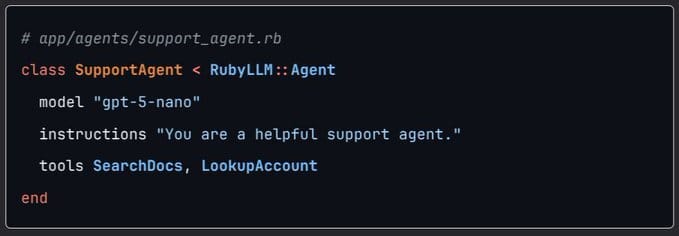
Carmine Paolino announced several RubyLLM updates: Datadog AI Guard integration making RubyLLM the first Ruby library with Datadog's AI observability support, AWS Bedrock and Azure AI Foundry support adding 263 models to push the registry past 1,000 total, and a new Agent interface coming in the next release.
Compound Engineering: The Definitive Guide Kieran Klaassen published a comprehensive handbook for AI-native development where each unit of work compounds into the next, built from experience creating Cora at Every. The guide covers a Plan-Work-Review-Compound loop, parallel review agents, and adoption stages. Kieran also shared a video walkthrough of the guide.
AgentFerrum Florian Lamache released a Ruby gem for AI agent browser automation that wraps Ferrum with an accessibility tree and markdown snapshot layer, achieving up to 90%+ token reduction versus raw HTML. Features ref-based element interaction, stealth profiles, and a CLI mode for stateless agent workflows.
Chaos to the Rescue Valentino Stoll released an gem that uses LLMs via RubyLLM to dynamically generate missing methods at runtime and suggest fixes for Rails exceptions during development, with safety guardrails including allowlists, secret redaction, and no auto-execution of generated code.
Self Agency Dewayne VanHoozer created a Ruby mixin that generates and installs methods at runtime from natural language descriptions using LLMs via RubyLLM, inspired by Valentino Stoll's chaos_to_the_rescue gem.
Pocketrb Maciej Mensfeld released a minimal Ruby AI agent framework built on RubyLLM with async message processing, multi-LLM support, and deployment via CLI, Telegram, or WhatsApp. Features include context compaction, browser automation, cron scheduling, a keyword-matched memory system, and a runtime skills system.
Typed Bus Dewayne VanHoozer open sourced a Ruby gem for in-memory fiber-async pub/sub messaging with typed channels, ACK/NACK delivery semantics, dead letter queues, and adaptive throttling, inspired by the message bus in Pocketrb.
Code-on-Incus Maciej Mensfeld also updated his container runtime for sandboxing AI coding agents, with automatic UID mapping, credential isolation, parallel sessions, and snapshot support. Maciej noted his Ruby-based agent now features PARA (Projects, Areas, Resources, Archives) memory and self-improving code capabilities.
GemChat Saroj Maharjan launched an AI-powered chat tool that lets developers ask questions about any Ruby gem in plain English and get actionable code examples, built with Hotwire and sign in with GitHub to start chatting.
EasyTalk Sergio Bayona released version 3.3.1 of his Pydantic-style Ruby gem for defining structured data contracts, adding RubyLLM integration that lets developers use schema models directly with structured outputs and tool calling.
Building LLM Applications with Ruby on Rails Damian Galarza announced a book for Rails developers covering LLM integration with OpenAI and Anthropic, prompt management, streaming via Turbo Streams and Action Cable, testing non-deterministic AI systems, and cost tracking, built around a support ticket example project.
Kimurai Framework Victor Afanasev updated his Ruby web scraping framework with AI-assisted extraction that uses an LLM to generate XPath selectors on the first request, then caches them for zero-AI subsequent scrapes. The framework supports LLMs via Nukitori, alongside traditional Capybara-based browser automation.
CovLoupe Keith Bennett released v4.0 of his SimpleCov analysis toolkit (renamed from simplecov-mcp), providing an MCP server that lets AI assistants query coverage gaps and prioritize untested code.
QueryLens Bryan Beshore released a mountable Rails engine that lets non-technical team members query databases in plain English using any LLM via RubyLLM, with safety layers including read-only transactions, SQL parsing, function blocklists, and two-stage schema handling for large databases.
Claude Code Skills Obie Fernandez started a shared collection of Claude Code skills including applying betterstimulus.com patterns and zero-configuration OAuth for MCP server connections.
Conductor Setup for Rails Apps Jeremy Smith posted about his Conductor scripts for Rails development, covering workspace setup with Docker, mise, and Foreman, isolated per-workspace databases, and automated cleanup on archive.
Claude Rails Dev Alexey Poimtsev created a modular Claude Code configuration that transforms the AI assistant into a team of specialist roles for Rails development, with slash commands for architecture, coding, auditing, DevOps, i18n, and an orchestrator that routes tasks to the appropriate persona.
Claude Agent SDK Ruby Rob Zolkos highlighted this community-maintained Ruby port of Anthropic's Claude Agent SDK, which provides feature parity with the official Python SDK including bidirectional conversations, custom tool definitions, streaming, permission callbacks, and Rails integration.
Claude Code Skill for Self-Testing with Playwright Jankees van Woezik shared a Claude Code skill that teaches the agent to start a dev server, authenticate via Rails console, and verify features in a browser using Playwright MCP, creating a self-improvement loop where the agent tests its own work.
LLM QuickGenerate for Rails Matt Swanson showed his full Cursor chat log showing the iterative development of a reusable LLM::QuickGenerate Ruby model for auto-titling and summarizing text, covering prompt design, token estimation, and LLM adapter support.
Claude Worktree Ben Garcia released a Ruby TUI built with ratatui-ruby for managing git worktrees during parallel Claude Code sessions, with auto-symlinking of .env and node_modules, custom setup scripts, and safety checks for uncommitted changes.
Ruby-TI Hamachan shared a zero-annotation static type analyzer for mruby that integrates into LLM workflows via a skills layer, letting models query type signatures and structured documentation instead of raw source code.
Pro Editor Pocket Hamachan also built a VS Code-inspired PicoRuby editor for the T-Deck Plus handheld device, featuring syntax highlighting, code completion, trackball navigation, and SD card storage for writing and executing Ruby on embedded hardware.
David Paluy reviewed Layered Design for Ruby on Rails Applications by Vladimir Dementyev, calling it the missing manual for post-MVP Rails projects. He highlighted the AI chapter, noting Vladimir's treatment of agents as first-class abstractions for non-deterministic interactions with references to RubyLLM and ActiveAgent.
Ruby Community Awards to Honor Matz, Chad Fowler, Rich Kilmer, David A. Black and More at Gala Dinner Ahead of RubyConf 2026 Ruby Central announced its inaugural gala dinner on July 13 in Las Vegas, awarding Lifetime Achievement to Matz, Chad Fowler, Rich Kilmer, and David A. Black, plus honors to Emily Samp, Saron Yitbarek, and Nadia Odunayo for community service, mentorship, and innovation.
The Ruby Users Forum Is Now Live Javier Cervantes launched a new community forum for Ruby developers with categories for help, learning resources, announcements, and community discussions.
RubyConf 2026 Call for Speakers RubyConf Las Vegas opened its CFP with a March 15 deadline, accepting 30-minute talks and 2-hour workshops including a track for AI-assisted Ruby development called "Living with the Robots".
Y Combinator president Garry Tan called Ruby on Rails + Claude Code a "crazy unlock", noting that Rails was designed for syntactic sugar and LLMs are "sugar fiends."
Articles
Teach Your AI to Think Like a Senior Engineer Kieran Klaassen presented eight planning strategies for AI-assisted development, using parallel research agents to investigate best practices, reproduce bugs, and analyze existing codebase patterns before writing code.
How I Think About Building Rails Apps in 2026 Yuri Sidorov overhauled his Rails starter template to be AI-native by default, adding MCP tool parity for every feature, RubyLLM integration, Claude Code conventions, and TDD-first development alongside vanilla Rails choices like SQLite, Hotwire, magic links, and UUIDv7.
Essential Ruby Gems for Working with Agent Skills Files Lucian Ghinda released three foundation gems for AI agent tooling in Ruby: agent_skills_configurations for discovering agent config paths, agent_skill_parser for parsing YAML frontmatter skill files, and agents_skill_vault for downloading and syncing skills from repositories.
Your AI Doesn't Write Every Framework Equally Well Steve Clarke had Claude Code build the same UI in five stacks and found React and Rails + Hotwire produced polished results on the first pass while Vue consistently struggled, suggesting training data density now matters when choosing a framework for AI-assisted development.
RAG on Ruby on Rails Jesse Waites walked through building a production RAG pipeline for a hiking club using Rails 8, pgvector, Voyage AI embeddings, and Solid Cable for real-time streaming without Redis.
Using Conductor with Ruby on Rails Andrea Fomera demonstrated configuring Conductor for Rails apps, covering required shell scripts for setup, run, and archive phases along with database isolation strategies across git worktree-based workspaces.
Conducting Rails John Nunemaker shared practical tips for running Rails apps across multiple Conductor workspaces with Claude, covering per-workspace test databases, dynamic port handling, and setup scripts that made parallel AI-assisted development reliable.
How to Build an AI Agent for Talent Matching, Part 2 Paulo Tarso built a Rails-based talent matching system using Active Genie's Scorer module and Claude 4.5 Sonnet to convert developer profiles into narrative prompts and score them against job criteria, returning ranked candidates with AI reasoning for human review.
Let Agents Test Their Own Work Jankees van Woezik showed how giving Claude a Playwright MCP testing script enabled the agent to self-verify its work through browser automation, turning one-shot code generation into an iterative self-correction loop.
Claude Code Found Bugs I Wasn't Looking For Chris Sonnier asked Claude Code to document Rails models for data layer reconstruction and discovered it surfaced hidden bugs including a hardcoded || true condition and inconsistent JSON field naming across dozens of background jobs.
Prompt Decision Records: A Documentation Pattern for LLM Systems Chris also proposed adapting Architecture Decision Records for LLM systems, capturing prompt strategies, model configurations, failed approaches, and known gotchas alongside code.
How I Actually Use AI to Write Ruby on Rails Code Mario Alberto Chávez Cárdenas described a layered documentation approach for AI-assisted Rails development, building context through architecture docs, pattern guides, and implementation specs to generate shippable code for both legacy and greenfield applications.
RIP "There's a Gem for That": How AI Flipped the Script Zil Norvilis argued that AI-generated bespoke code is making many mid-tier Ruby gems obsolete, as LLMs can produce tailored, dependency-free utilities faster than finding, configuring, and maintaining external libraries.
How I Coded a Rails 8 CFP App in 30 Minutes with Antigravity Riccardo Carlesso used Google's Antigravity AI agent to build a Rails 8 conference submission management app for Rubycon, going from prompt to working MVP with Devise and data ingestion from Gmail via MCP in under 30 minutes.
Stream AI Responses from Rails to React Ganesh Navale demonstrated using Server-Sent Events with ActionController::Live to stream OpenAI responses token-by-token from a Rails API to a React frontend, avoiding WebSocket complexity.
The Single Most Important Thing That Made Me Believe AI Coding Could Work Marcin Ostrowski found that Claude Code hooks, scripts that block file edits until convention skills are loaded, solved the problem of AI ignoring Rails coding guidelines and became essential for enforcing project standards.
How Do You Know the Software Is Working? Marcin also outlined a local CI pipeline for AI-assisted Rails development using Rubocop, Brakeman, RSpec, and Undercover, combined with a code review process using separate agents to catch what LLMs miss.
Why Ruby Is Excellent for AI Development Mijo Kristo argued that Ruby's 40% token efficiency advantage over Python, combined with gems like Rumale, LangChain.rb, and ruby-openai, makes it well-suited for AI-powered web apps, RAG systems, and LLM orchestration.
Building Breakwater with AI Ben Curtis recounted building Breakwater, a Docker image licensing platform, using ChatGPT for architecture planning and Claude for implementation, arguing that AI shifted the SaaS bottleneck from technical capability to market viability.
Database-per-Branch Workflow in Ruby on Rails Using the BranchDb Gem Ali Fadel introduced BranchDb, a gem from that automatically creates isolated PostgreSQL databases for each git branch by hooking into db:prepare and cloning via pg_dump | psql, with parent branch detection through git reflog.
AI Agents in Ruby: Why Is It So Easy? Fernando Martinez used a 250-line coding agent built with RubyLLM to argue that two factors make Ruby ideal for AI agents: LLMs reducing AI to an integration problem, and Ruby's high capability-to-effort ratio for orchestrating complex interactions with minimal code.
The Future of Coding Agents Is Vertical Integration José Valim argued that generic coding agents create inefficient workflows because they can't see what they build, and proposed vertically integrating agents into frameworks like Rails so they can interact with running applications, access the DOM, and read real-time logs.
Clankers with Claws David Heinemeier Hansson built an AI agent named Kef using OpenClaw that navigated human-facing UIs without any special APIs or MCP accommodations, demonstrating that agents don't need specialized infrastructure since human-centered interfaces will prove sufficient.
When an AI Agent Gives Advice and One of the World's Most Influential Devs Takes It Errol Schmidt examined how DHH accepted an architectural recommendation from an AI agent to flatten nested routes in the Basecamp API, arguing this signals a shift where AI agents are becoming credible participants in design review for production Rails applications.
How to Build a Copilot Agent That Debugs Production Errors Joshua Wood walked through building a custom GitHub Copilot agent that connects to Honeybadger via MCP to retrieve error details, analyze stack traces, and open pull requests with fixes and regression tests.
So, Your Developers Use AI Now: Here's What to Know Ivan Eltsov analyzed research showing AI-assisted development yields 30-40% productivity gains under limited circumstances, with benefits highest on greenfield projects using popular stacks and potentially negative on mature codebases.
Ruby on Rails + Claude Code = Magic Miles Woodroffe revisited his AI-assisted Rails workflow eight months later, reporting productivity gains in the "mythical 10x range" thanks to Opus 4.5 and refined AGENTS.md conventions, with a practical example of adding exercise tracking to an iOS app in under 30 minutes using only screenshots.
Convention Over Configuration Was Always an AI Multiplier Matthew Karsten argued that opinionated frameworks like Rails produce more consistent AI-generated code because conventions reduce the "decision surface area" LLMs must navigate, while blank-canvas frameworks cause architectural drift across sessions.
It Takes a Village: Building Gusto's First AI Risk Agent Xao Yang described building GROW, an AI agent for onboarding risk assessment built inside Gusto's Rails monolith, where operations specialists co-created structured prompts encoding years of institutional knowledge.
Building AI Bots in a Ruby on Rails Application Ravi Prakash provided a step-by-step tutorial for integrating an AI chatbot into a Rails app using OpenAI's API, service objects for clean architecture, and Rails credentials for secure key management.
Building a Customer Service Chatbot in Ruby on Rails Ravi also walked through building a Rails chatbot using service objects for a rules engine with regex-based FAQ matching, conversation persistence, and OpenAI integration for handling questions.
Ruby on Rails AI Integration: From Setup to Deployment Devot surveyed four approaches for adding AI to Rails apps: direct API calls via ruby-openai and langchain.rb, Ruby-native ML with torch-rb, polyglot Python microservices, and Rails-native agent frameworks like Raix and Sublayer.
Your IDE Is a Comfort Blanket Robert Matsuoka argued that while traditional IDE features augment cognition, AI code generation replaces it, citing the METR study showing developers were slower with AI tools while believing they were faster. He advocated for CLI-based specification-driven workflows that force developers to articulate intent before generating code.
How AI Broke the Syntax Barrier and Let Me Ship Alone Dávid Ondruš described how AI tools enabled him as a software architect to ship projects in languages he understands conceptually but not syntactically, including building Ruby on Rails plugins for Redmine that previously weren't worth the learning investment for a quick prototype.
Announcing the 2026 Gem Fellowship Mike Perham announced eight Ruby open source projects selected to share $100,000 in grants, including Rouge, ruby-git, SimpleCov, Herb, Ferrum, and Bridgetown.
Videos
Claude Code David Kimura of Drifting Ruby demonstrated using Claude Code for Rails development, covering installation, context windows, test generation, the VS Code extension, and running local models.
A New Claude Skill for Rails Code Audits Chad Pytel of Thoughtbot built a Claude Code skill that audits Rails applications against Thoughtbot's coding standards and best practices, inspired by Jose Blanco's work on automated code auditing.
RailsFast: The Vibe Coding Template for Rails 8 Javi Ramírez deployed a full-stack Rails 8 SaaS boilerplate to production on a Hetzner VPS using Kamal, with built-in authentication, Stripe payments, admin dashboard, and Solid Queue/Cache/Cable.
Building CreatorSignal: Rails Auth and Deploy from Scratch Damian Galarza live-coded a Rails SaaS app using Claude Code as the sole development partner, demonstrating plan mode for feature architecture, a custom TDD skill enforcing outside-in testing, iterating on CLAUDE.md to teach coding patterns, and sub-agent code reviews of AI-generated code.
Podcasts
The Ruby AI Podcast: New Year, New Ruby: Agents, Wishes, and a Calm Ruby 4 Joe Leo and Valentino Stoll discussed Ruby 4's quiet Christmas release, agent-driven development workflows with Claude Code, and survey data showing workers spend 4.5 hours weekly fixing AI-generated "slop."
The Ruby AI Podcast: From Writing Code to Orchestrating It: Agentic Development with Ben Scofield Joe Leo and Valentino Stoll interviewed Ben Scofield about the shift from writing code to orchestrating AI agents, covering deliberate practice research applied to developer skill growth, Ruby's dynamic primitives in agentic contexts, and strategies for mentoring in an AI-enhanced landscape.
Technology for Humans: Tech Roundup: Heroku's Demise, the AI Coding Wars, Events Errol Schmidt of reinteractive covered Heroku's shutdown, the intensifying competition among AI coding models, and upcoming Ruby events including RubyConf and RailsWorld.
Builder Stories: Build Your Own Marketing Tools with Claude Code Brian Casel interviewed Colleen Schnettler, a Rails developer and SimpleFileUpload founder, who built a voice-note-to-LinkedIn publishing system in two days using Claude Code with the Compound Engineering framework for planning and multi-agent execution.
Discussions
People Are Sleeping on How Much Rails+Claude Is a Crazy Unlock The r/rails community debated Y Combinator CEO Garry Tan's claim about Rails and Claude, with commenters noting that convention-over-configuration makes Rails particularly LLM-friendly while others pointed out Claude still struggles with Rails-specific patterns like callbacks and base controller conventions.
Which Agents and MCPs Are You Using to Develop Ruby on Rails with Hotwire? Lucian Ghinda asked the Ruby community to share their Claude MD instructions, skills, plugins, and MCP configurations optimized for Rails and Hotwire development with LLMs.
How I Forced Claude to Follow Rails Conventions with Pre-Edit Hooks Two r/rails discussions explored enforcing Rails conventions with AI agents described using Claude Code hooks to enforce guidelines that CLAUDE.md and skills alone couldn't reliably maintain, while the follow-up I Don't Read My AI Agent's Code Until CI and Three Code Reviews Pass detailed a workflow where local CI and reviewer agents validate generated code before the first human review.
Events
Previous
Wnb.rb: Fake Minds Think Alike: AI, Ruby, and Similarity Search Valerie Woolard presented at Wnb.rb on vector data types and their role in LLMs, walking through a practical example of building similarity search with Ruby.
Upcoming
February 18th - Meetup: ArtificialRuby is hosting a Ruby AI demo night on February 18th at Betaworks in New York City, featuring Andrew Denta on "Realtime AI Agents in Ruby" and Valentino Stoll on "Chaos to the Rescue" with networking and drinks from 6 to 9 PM.
February 25th - Meetup: SF Ruby’s monthly meetup will be on February 25th in San Francisco at Sentry featuring talks on startup demos, open-source contributions, and real-world engineering stories.
March 7th - Workshop: I will be leading a workshop for Philly.rb for Introduction to Generative AI Programming with RubyLLM on March 7th in Philadelphia at CultureWorks. The session will cover RubyLLM fundamentals from basic chatbots to advanced techniques including tool calling, RAG, and multi-agent systems.
March 12th - Meetup: KRUG Meetup at Ruby Community Conference 2026 Visuality announced a KRUG meetup on March 12 in Cracow, Poland at the Zendesk Office, the day before Ruby Community Conference 2026, featuring Andrzej Krzywda, José Valim, and Piotr Dąbrowski. No conference ticket required.
March 13th - Conference: The Ruby Community Conference Winter 2026 in Cracow, Poland will have a heavy focus on Ruby and AI, with presentations and workshops including:
Obie Fernandez: Ruby & AI Conversation
Irina Nazarova: Startups on Rails and AI Integration Patterns
Carmine Paolino: Building AI Apps in Ruby and Rails with RubyLLM
Paweł Strzałkowski: Model Context Protocol in Ruby on Rails
Open Source Updates
Code Spotlight
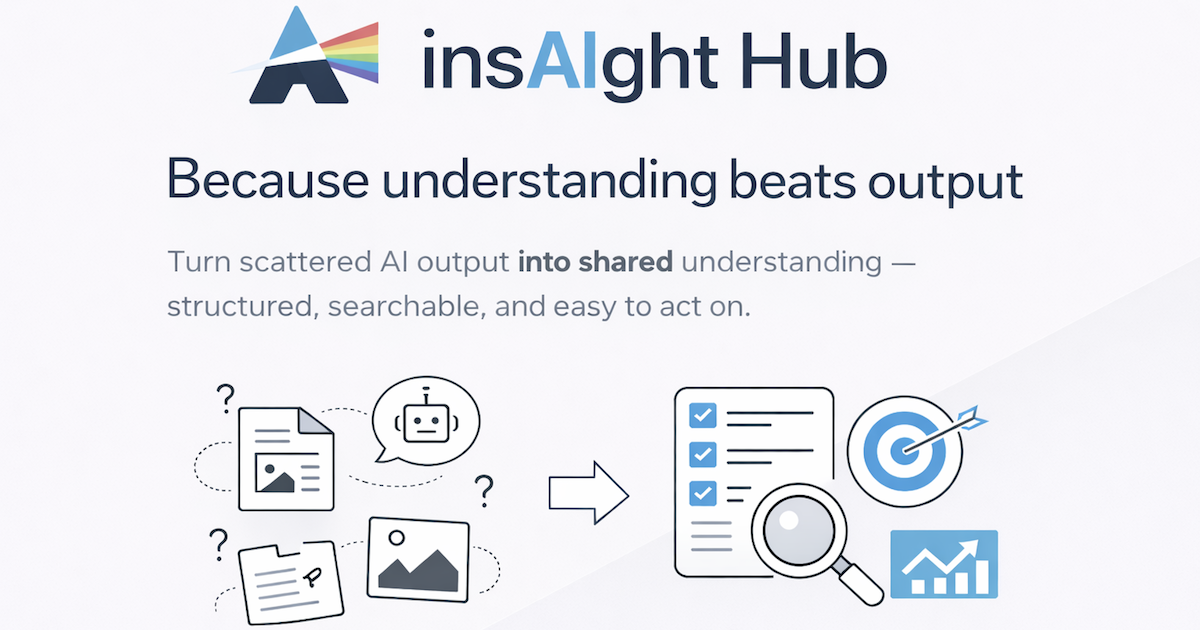
Chris Sonnier open sourced insAIght Hub, a Rails 8 application for organizing and collaborating on AI-generated outputs. The platform turns scattered AI insights into a structured, searchable knowledge base with audience-based tagging, threaded discussions, multi-file insight creation, and MCP server integration for AI agents.
New Gems
Links to the RubyGems page, newest releases are first:
graph-agent - A Ruby framework for building stateful, multi-actor agent workflows
runway-ruby - A Ruby client for RunwayML's API
understand - Understand your codebase with a LLM
query_lens - Natural language SQL query builder for Rails, powered by AI
agent_ferrum - Wraps Ferrum with AI-optimized content extraction
monty-rb - Ruby bindings for Monty
collavre_slack - Slack integration for Collavre
collavre_github - GitHub integration for Collavre
git-markdown - Convert GitHub PRs to Markdown for local AI code review
google-apis-ces_v1 - Client for Gemini Enterprise for Customer Experience API V1
wardstone - Ruby SDK for the Wardstone LLM security API
agent_c - Batch processing for pipelines of steps for AI
clawthor - DSL and compiler for Claude Code plugins
pocketrb - Pocket-sized Ruby AI agent framework with multi-LLM support
admin_suite - Reusable admin suite engine
rainbow_llm - A routing gem for multiple LLM providers with automatic failover
deepseek-video - DeepSeek Video - AI Video Generator Online
prompt_guard - Prompt injection detection for Ruby using ONNX models
perplexity-image - AI Image Generator - Create stunning visuals instantly
supermaker-ai-pose-generator - High-quality integration for https://supermaker.ai/blog/unlock-perfect-poses-the-ultimate-guide-to-ai-pose-generators/
ai-replace-prompt - High-quality integration for https://supermaker.ai/blog/best-ai-replace-prompts-to-transform-your-photos-instantly/
collavre_notion - Notion integration for Collavre
collavre_openclaw - OpenClaw AI Gateway integration for Collavre
ai-walking-video-generator - High-quality integration for https://supermaker.ai/blog/ai-walking-video-generator-create-realistic-walking-videos-free/
nanabananaimg - NanaBanana IMG - AI-powered image generation platform
vishalo - Vishalo - AI-powered visual creation platform
formy3d - Formy 3D - AI 3D model generator
murekav8 - Mureka V8 - AI-powered music generation platform
hunyuan-3d - Hunyuan 3D - AI-powered 3D model generation platform
voe4 - VOE4 - AI-powered video generation and editing platform
dreaminai - DreaminAI - AI-powered creative platform
girb-gemini - Gemini provider for girb
girb-ruby_llm - RubyLLM provider for girb
girb - AI-powered IRB assistant
ralph.rb - Autonomous agentic loop for Claude Code, Codex & OpenCode
ralph - Autonomous agentic loop for Claude Code, Codex & OpenCode
rails_orchestrator - Framework to build AI agents in Rails with tool support, memory and orchestration
llmemory - Persistent memory system for LLM agents
vibecode - A local-first “Codex-style” CLI but powered by Ollama
rubeno - The Ruby implementation of Testeranto
seedance-2 - Seedance 2 - Next-generation AI platform
seedream5-ai - Seedream5 AI - AI-powered video generation platform
agent_skills_configurations - Unified interface for discovering AI coding agent skill paths
self_agency - LLM-powered runtime method generation for Ruby classes
rubyrana - Build production-ready AI agents in Ruby
kling3-ai - Kling 3 AI - Next-generation AI video creation platform
sprites-ruby - Ruby client for the Sprites API
daimond - Deep Learning framework for Ruby with Rust backend
clyro - The Agent Kernel
claude-worktree - A TUI tool to manage Git Worktrees for AI coding agents
agent_skills - Ruby implementation of the Agent Skills open standard
og_pilot_ruby - Ruby client for the OG Pilot Open Graph image generator
agent_skill_parser - Parse agent skill files with YAML frontmatter and markdown body for agent/AI systems
semantic-cache - Semantic caching for LLM API calls
agents_skill_vault - A Ruby gem for managing AI agent skills from GitHub repositories
chaos_to_the_rescue - Safe-by-default LLM-powered method generation and Rails error rescue suggestions
rails_skills - Organize AI skills for Rails projects, shared between Claude and Codex
collavre - Collavre platform engine
exa-rb - Exa API for neural and keyword-based web search with content retrieval capabilities
kiribi-ruri_v3-30m - Easy to use onnx models
New Open Source
Links to the Github repository:
FrankMD - Self-hosted markdown note editor and organizer built with Rails that stores notes as plain files with AI-powered grammar checking via LLM
AI Agent Refactoring System - AI-assisted legacy code refactoring system that uses characterization testing to validate cross-language conversions
MultiAgentProtocols - Provides unified client and server implementations for MCP, ACP, and A2A agent communication protocols
Pipes - File-based AI agent orchestration system that uses Unix philosophy to queue work items as JSON files and process them via Claude in parallel tmux sessions
News Curator - AI-powered news curation tool that fetches articles daily from Google and uses Claude to select and score the most relevant pieces
Fizzy Pop - Polling daemon that monitors Fizzy for unread notifications and forwards them to OpenClaw AI agent webhooks at configurable intervals
Houston - Self-hosted AI life assistant with goal-oriented autonomous agents, persistent memory, scheduled check-ins, and MCP integrations
Smart Catalog - Rails 8 demo app showcasing AI patterns including RAG with pgvector, hybrid search, and LLM query classification using Google Gemini
SwarmPod - Mountable Rails engine for real-time multi-agent orchestration featuring a live WebSocket dashboard and parallel agent execution organized by Gemfile groups
PlaceAgent - LLM-powered business discovery gem that combines Google Places API with nagentic tool-calling to search and rank local businesses
Thinkn't - AI-powered multimedia quiz generator that uses GPT-4 to create customizable group quizzes with audio, video, and image questions
Wgit MCP - MCP server that enables AI LLMs to interact with the Wgit web indexing and search library
Customer Pulse - Feedback aggregation system that collects from Linear, Google Forms, and Slack to sends daily email digests with Claude
Color Grade AI - AI-powered .cube LUT generator that analyzes video frames and creates targeted color correction look-up tables, usable as a Claude Code skill
Jobs & Opportunities
Are you an organization searching for an expert Ruby AI developer, or a Rubyist looking for your next development role with AI? Please reach out and let me know the type of opportunity you’re pursuing: [email protected]
Featured
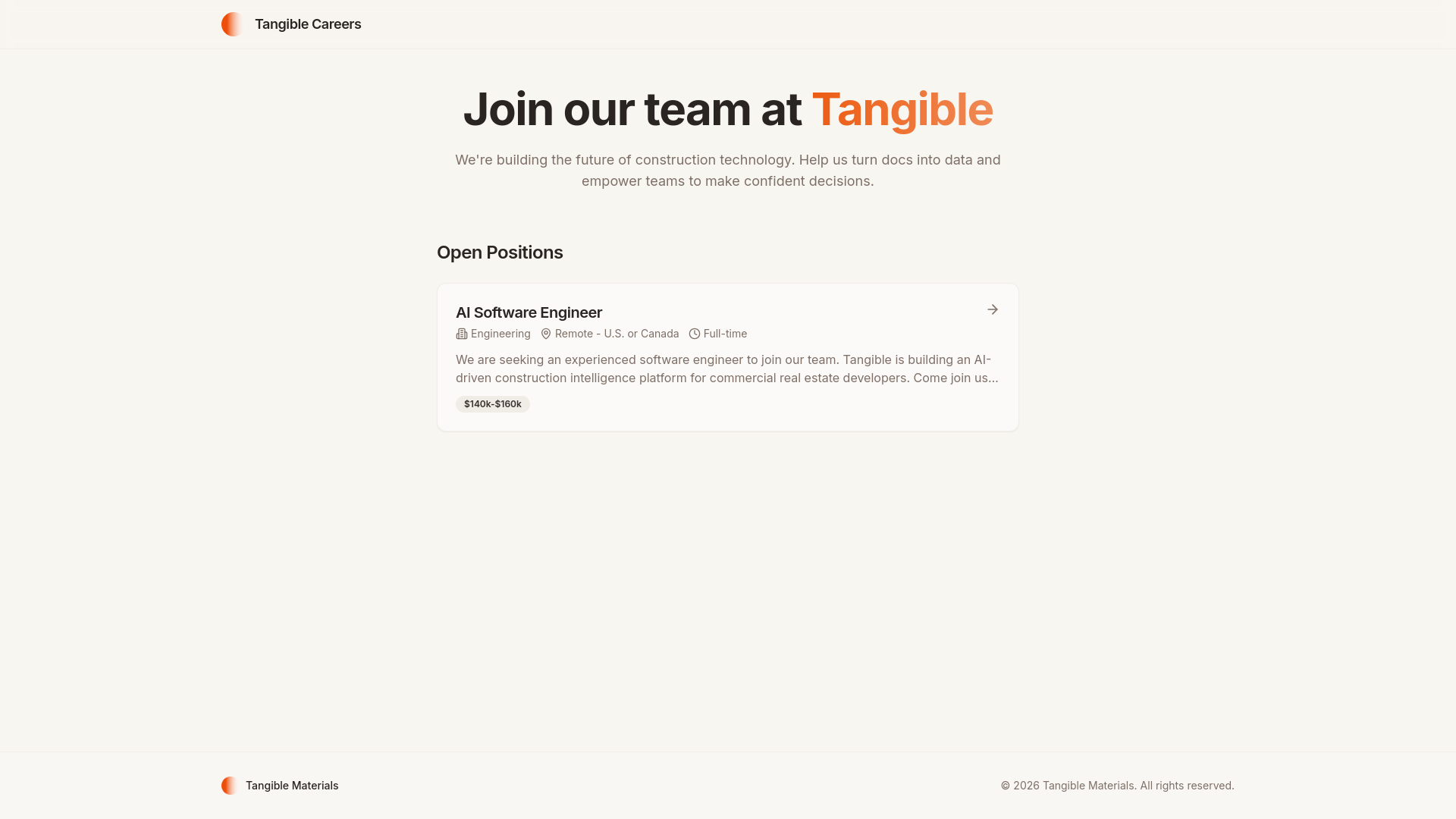
Remote - US & Canada: Tangible Materials Is Hiring an AI Software Engineer to build an AI-driven construction intelligence platform using Ruby on Rails, TypeScript, and React, working with 3D models and PDF construction documents to optimize carbon emissions in commercial real estate.
One Last Thing

Daniela Baron wrote Speeding Up PostgreSQL Full-Text Search with Persistent TSVectors, showing how the default pg_search gem configuration computes tsvectors at query time, forcing PostgreSQL into sequential scans that degrade at scale. The fix involves adding a persistent tsvector column with a GIN index and a database trigger to keep it in sync, reducing query time from ~283ms to ~2.4ms (a 118x speedup) on 100k rows. The article includes the complete Rails migration with concurrent index creation following strong_migrations best practices and the one-line pg_search configuration change needed.
That’s all for this edition! Be sure to reach out if you have any stories, content, jobs, or events you want featured in the newsletter.