- RoboRuby
- Posts
- Ruby AI News - June 1st, 2026
Ruby AI News - June 1st, 2026
Agent-friendly = human-friendly, and Ruby is both

Matt Solt
June 01, 2026

Welcome to the 31st edition of Ruby AI News! This edition features app builders and skills that turn a single prompt into a full Rails prototype, benchmarks making the case for Ruby’s token efficiency, a consensus of opinions that as code gets cheap, judgment and ownership become the real engineering job, and much more.
Contents
Top Stories
No top stories this edition, need to prep for events and work on some long form content I look forward to sharing with you soon. It would have been difficult to pick three stories, it is a huge edition and there are so many incredible announcements and articles in here. I'm excited about where Ruby AI is heading and can’t wait to see what the community builds next.
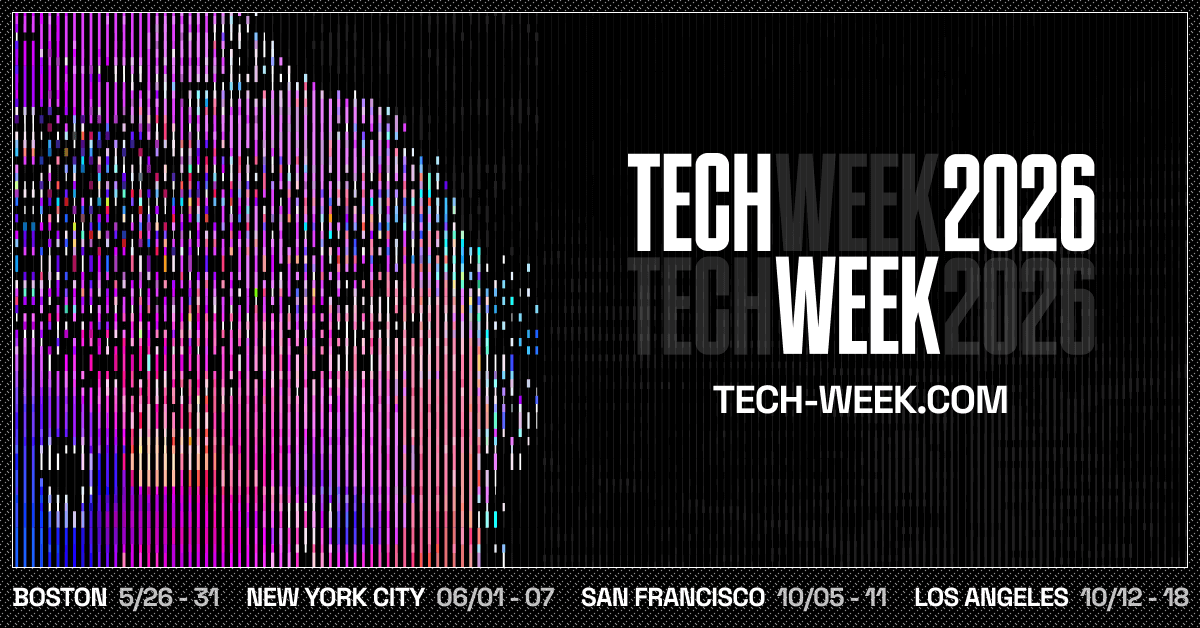
I will be at New York Tech Week this week, so if you are in town, drop me a line and let me know if you want to talk Ruby and AI. Andrew Yeung curated a NY Tech Week 2026 directory of 61 events running from June 1st to the 10th for founders, operators, and investors, including AI sessions from Anthropic, ElevenLabs, and Google DeepMind and a "build your first AI workflow with Claude" workshop.

And of course, don’t miss the most important event of the week, Artificial Ruby! Bryan Helmkamp, previously the founder of Code Climate, will be presenting on the story of building Fabro, an open source workflow engine that turns AI coding agent work into version-controlled graphs with human gates, model routing, sandboxed execution, and observable runs, walking through the product and architecture decisions behind moving from chatting with an agent to orchestrating a process for real engineering teams. The meetup runs from 6 to 9pm on June 4th at Betaworks NYC.
Need to Know AI News
What Anthropic's Claude Billing Changes Mean for Zed Users Zed explained that from June 15 Anthropic bills third-party agent and SDK usage from new "Agent SDK credits" at full API rates, a steep increase for heavy agent users. In response, Zed shipped terminal threads for running the official Claude CLI or any CLI agent inside its Agent Panel, and argued for running local models via Ollama, LM Studio, or llama.cpp.
Introducing Dynamic Workflows in Claude Code Anthropic previewed dynamic workflows, where Claude writes an orchestration script on the fly and runs tens to hundreds of coordinated subagents in parallel, checking its own work before results reach you. It targets codebase-wide audits, large migrations, and adversarial verification, triggered by the word "workflow."
How I Use Cursor Lauren Tan, an engineer at Cursor, argued agent orchestration should go deep, not broad, and open-sourced pstack, her rigor-focused skill set. In the same vein, Cursor published its Team Kit, led by the thermo-nuclear-code-quality-review skill, which deletes complexity instead of moving it, blocks files over 1,000 lines, flags thin wrappers, and rejects PRs that work but make code messier.
Codex-maxxing Jason Liu, now on the Codex team, shared the primitives behind using OpenAI Codex as an always-on work assistant: durable pinned threads, an Obsidian memory vault, voice dictation, mid-execution steering, and scheduled "heartbeats" that check Slack and Gmail, so work progresses even when away.
Cloudflare for Startups Cloudflare's Kristian Freeman announced a relaunched startup program with faster reviews and up to $350k in credits across funding-stage tiers, covering Workers, storage, and Workers AI for early-stage companies building on its developer platform.
The 2026-07-28 MCP Specification Release Candidate A preview of stateless MCP: no handshake or session id, so any request can hit any server instance behind a load balancer. It adds first-class extensions, OAuth hardening, JSON Schema 2020-12 tool schemas, and a formal deprecation policy retiring Roots, Sampling, and Logging.
Announcements

Bellatrix One Chris Hobbs launched a Ruby-built platform for deploying and managing MCP servers. Teams request a connector to any service like Gmail or Notion, and the platform builds it, deploys it serverlessly, and configures it per user, accessible through a web interface or any MCP client.

Hifumi.dev: Build Rails Apps From a Chat Paweł Strzałkowski premiered Hifumi, an open source AI app builder that turns a prompt into a real Rails 8 app with Hotwire, Tailwind, and no lock-in. A Solid Queue pipeline drives a self-healing loop that implements, verifies, remediates, and commits, using RubyLLM for the chat layer and Roast for workflow orchestration, plus one-click Kamal preview and GitHub export.

insAIght Hub Chris Sonnier open-sourced a Rails application that gives AI agents a shared filing cabinet for analysis, reports, and insights. Built with SQLite and an MCP server, it serves markdown to agents and HTML pages to humans, with full-text search, tagging, and threaded comments.

RailsCTO Matt Sears released an opinionated, open-source Claude Code plugin that guards Rails projects against AI "slop." Skills auto-trigger on file changes to run quality checks (RuboCop, Reek, Flog, Flay) and security scans (Brakeman, bundler-audit) before commits, and force architecture review focused on keeping Rails conventions.
OpenClacky Yafei Lee created a Claude Code-style terminal coding agent in pure Ruby with no C-extension gems, so gem install works on a bare machine. Skills are markdown files loaded at runtime, tools self-register via ObjectSpace, and a prepend injects prompt-cache markers for a 90%+ hit rate.
Build Your Own Openclaw With Ruby and Matrix Nathan Kidd demonstrated building an autonomous agent swarm, wiring a Matrix server to agents over A2A using the agent2agent gem, async-matrix, fluffychat, and falcon. His latest release adds openclaw-style "heartbeats," cron-like loops built on Samuel Williams's async-service that inject prompt files like SOUL.md to drive autonomous tasks.
RubyLLM::Schema Carmine Paolino took over from Daniel Friis to lead the Ruby DSL for defining JSON schemas that constrain LLM structured output and tool parameters. With 0.3.1 he laid out a plan to grow it beyond RubyLLM into a full JSON Schema 2020-12 DSL for Ruby, and 0.4.0 added dependencies and conditionals.
Rubish Akira Matsuda wrote a Unix shell in pure Ruby that runs bash syntax but lets you drop into Ruby anywhere, with method-chained pipelines like ls().sort.uniq. His RubyKaigi talk My Daily Life on Ruby framed a "Pax Rubyna" of reimplementing his whole dev environment in Ruby, crediting AI for building the shell in two weeks.
Kobako Aotokitsuruya released a gem that runs untrusted, LLM-generated mruby code in-process by embedding the mruby interpreter inside WebAssembly via wasmtime. Inspired by Cloudflare's Code Mode, it blocks filesystem, network, and memory access, letting guest scripts reach the host only through explicitly declared Service proxies.
Rubyn Code v0.5.0 Matthew Suttles updated his Rubyn AI coding assistant for Rails to end manual skill configuration. Rubyn Code matches your message to relevant skill packs and autoloads them, fetching any missing packs silently from the Rubyn registry, with /install-skills and /remove-skills now working end-to-end.
ActiveHarness Ilya Zykin created a Ruby framework for building production-grade LLM pipelines in Rails or plain Ruby. Built on RubyLLM and a Rails-friendly DSL, it chains multi-step agents with "Tribunal" consensus voting, automatic model fallbacks, retries, lifecycle hooks, and token-cost tracking.
Robert Robert (0x1eef) released Robert (yes you read that right), a FreeBSD learning assistant shipped as a dependency-free 2MB binary built with mruby and the llm.rb runtime. The AI agent answers questions by reading and searching local man pages, streams responses as it invokes tools, and supports any OpenAI-compatible provider.
rails-llm v0.2.0 Robert also updated rails-llm, a Rails engine that wires the llm.rb runtime into Rails. An acts_as_agent macro gives ActiveRecord models conversational AI backed by persisted state, while generators scaffold the agent model, migrations, and routes, and a mountable engine serves a stream-capable chat UI.
NativeAppTemplate Agent Daisuke Adachi open-sourced a Claude Code agent that turns one sentence into a Rails 8.1 API, SwiftUI iOS, and Jetpack Compose Android app. It renames a multi-tenant queue substrate across Ruby, Swift, and Kotlin, while an OpenAPI-parity reviewer agent keeps the Rails API and clients in sync. [Demo]
mempalace-rb Ali Umair shipped a Rails-native long-term memory layer for AI agents that stays inside Rails and PostgreSQL instead of an external vector database. It stores memories verbatim, pairs Postgres full-text search with optional pgvector semantic search, and mines a codebase into searchable memory with one method call.
Rails Uses Fewer Tokens Felipe Vieira built SyntaxTax, a benchmark implementing the same API features across web stacks and counting how many tokens the handwritten code consumes as LLM context. Rails produced the lowest token count, which he credited to conventions stripping boilerplate.
Rails_AI_Agents Thibaut Baissac updated rails_ai_agents, his Claude Code configuration that brings spec-driven structure to AI-assisted Rails work. The release adds a /friction-review to pressure-test plans, artifact commands that render dense work as HTML summaries, mutation testing, and a token-saving "caveman" rule.
Asgard Dewayne VanHoozer released a Ruby task runner built on Thor that defines workflows in .loki files written in plain Ruby. The full Thor DSL is available, alongside shell helpers and shebang scripts, and a dependency graph groups tasks for concurrent execution in native Ruby threads.
llm_cost_tracker 0.11.0 Sergii Khomenko updated his Rails engine that intercepts LLM API calls via Faraday middleware, pricing and persisting every call to the database. v0.10.0 added pre-send budget blocking and multi-currency support, while the latest release refines the dashboard with filtering, sorting, and a per-model pricing page.
oauth2-mcp Peter Boling released a Ruby gem that secures HTTP MCP servers with OAuth, extending the oauth2 gem with resource-server pieces: protected-resource metadata, bearer-token challenges, scope-to-capability mapping, and audience validation to block token replay across servers.
Affirm Matt Lindsey shared a beginner-friendly Rails app for learning Rails and LLMs, a positive-psychology tool with daily affirmations, gratitude logging, and mood tracking plus optional OpenAI-powered features. He invites newcomers to claim open issues to add features while practicing Rails fundamentals over leaning on AI.
Rails 8.1 SaaS Boilerplate With AI Integration (Paid, $174) Owen Moss released a commercial Rails 8.1 SaaS starter bundling auth, payments, multi-tenancy, admin, and Kamal. Its AI layer wraps Anthropic with per-plan rate limiting and token tracking, and ships a CLAUDE.md plus Claude Code slash commands.
Knotr A Rails developer launched an app that syncs profiles, knowledgebases, and reusable skills across AI tools and exposes them to any MCP client. It ends the repetitive re-uploading of docs per tool and gives teams a shared, version-controlled skills workspace without git.
Rubyzen Perry Street Software open-sourced an architectural linter for Ruby that lets teams write lint rules as RSpec tests rather than AST node patterns. A high-level API exposes files, classes, and call sites to enforce rules like controllers not calling ActiveRecord directly, which can be useful for catching flaws in AI-generated code.
TIMEx: A Deadline Engine for Ruby Juan Gomez released a stdlib-only gem that treats timeouts as deadline budgets rather than one-off Timeout.timeout interrupts. A single API backs pluggable strategies, returns :ok:timeout:error results instead of raising, and propagates remaining time to downstream services via an HTTP header.
Introducing the Skylight MCP Server Skylight wired its Rails performance monitoring into AI coding assistants over MCP, so a gem install skylight-mcp lets your editor pull live production data. Ask "why is this endpoint slow?" and the assistant retrieves endpoint latencies, aggregate traces, N+1 detections, and deploy metadata.
EuRuKo 2026 Call for Proposals EuRuKo opened submissions for its single-track European Ruby conference, returning to Brno, Czech Republic in September, with proposals due June 16. The program committee is explicitly soliciting talks on "AI-Assisted Engineering & Code Generation at Scale" using LLMs in Ruby.
Articles
Inkmark: A Very Fast, AI-First Markdown Gem for Ruby Yaroslav Markin released Inkmark, a Markdown gem built on Rust's pulldown-cmark that he calls the fastest CommonMark engine for Ruby. Beyond GFM and syntax highlighting, it adds AI-first primitives: heading and sliding-window chunking for RAG, plain-text extraction for embeddings, and byte-range tracking for citations.
How I Structure LLM Calls in Rails Dmitry Tsepelev laid out an LLM layer for Rails built on a BaseLLMRequest base class whose subclasses override model, prompt, and output schema. Prompts live as ERB templates, RubyLLM validates structured output, and two test layers cover mocked requests plus scheduled real-API prompt checks.
Generative UI in Rails With RubyLLM Andrey Samsonov showed how to let an LLM compose UI without writing HTML, picking from a component catalog via a single generate_ui tool that takes a whole component tree. His GenerativeUI gem defines components once, deriving the LLM schema, validation, and render targets like Rails partials, ViewComponent, or native mobile.
AI's Favorite Coding Language Is Also the Most Expensive Michael Carroll ran the same feature 19 times across Ruby, TypeScript, and Python with Claude Code, and Ruby came out fastest and most token-efficient. Python lagged in "configuration hell," averaging 25 bash calls per session to Ruby's 17, yet LLMs still defaulted to it 58% of the time.
My Ever-Improving AI Setup for Rails Work With gbrain and gstack Vipul A M detailed his AI stack for Rails work, pairing Perplexity, Claude Code, and Codex with gbrain, a private memory of his style and Rails opinions, and gstack, which turns that memory into repeatable workflows, all gated by CI and human review.
Anthropic Message Batches in Rails: Cut Claude API Costs 50% With Async Batch Processing Roger Heykoop showed how batching Claude API calls halved a 40,000-document pipeline's weekly cost, modeling batches with two ActiveRecord models and Solid Queue jobs that submit, adaptively poll, and ingest results, with deterministic custom_ids for idempotency.
From Prompts to Production Agents: Encoding DDD and Engines into 41 Rails AI Skills Ismael Marin Cabrera described building 41 Rails AI skills and 9 workflows that encode Domain-Driven Design and Rails Engines patterns from his Solidus and Spree work. After skills scoring perfectly in isolation failed in real codebases, he used Tessl for multi-run evaluation and output contracts to hit 97% reliability.
Install Rails on Your Mac With Claude Code Julian Rubisch wrote a guide taking a fresh Mac to a running Rails 8 app via Claude Code skills. After watching a user freeze at a copy-paste step, he built jr-rails-bootstrap, a skill that interviews the user, installs prerequisites, and hands off to jr-rails-new to scaffold the app.
Teaching Coding Agents to Debug Rails Memory Issues With derailed_benchmarks Ibrahim Awwal had AI agents hunt a Rails memory leak using derailed_benchmarks. They struggled on a complex reproduction until he simplified it to a static page. In the end, a TailwindMerge::Merger stuck on CurrentAttributes leaked across requests, fixed by moving it to thread-local storage.
Building an AI Chat for OfiHQ Mario Álvarez detailed a production Rails AI assistant built on RubyLLM, with an MCP server that reuses the app's models, policies, and auth. Tools wrap existing service objects, Turbo Streams stream tokens, and writes use a preview-then-confirm flow, keeping responsibility in deterministic code, not the model.
Running AI Locally for Ruby Development Germán Giménez Silva walked through a fully local AI coding setup, Ollama serving Qwen coder models with Aider in the terminal and Continue in VSCode, so code never leaves your machine. On his Ruby-LibGD gem it handled boilerplate, RSpec scaffolding, and docs well, but did hallucinate some.
MCP-Powered Error Tracking in Rails Dalto Curvelano introduced Faultline, a Sentry-like error tracking engine for Rails with exception grouping and a local-variable inspector. Its built-in MCP server lets a coding agent query production errors, correlate stack traces to the codebase, and write reproducing tests or file GitHub issues.
My Agent Skill for Test-Driven Development Jason Swett shared a Claude agent skill that encodes Kent Beck's Canon TDD, reframing red-green-refactor as a "specify, encode, fulfill" loop. Paired with a Test Design Review skill, it gets the agent to refactor before testing and catch its own design violations.
The Prompt Patterns That Make Claude 10x More Useful in a Rails Codebase Ahmet Kaptan detailed prompt patterns for steering Claude in Rails work, like "match the existing style," "as if I were a code reviewer," "give me three options," "explain it before you write it," and "what are the failure modes," leaning on Rails's conventions.
AI Didn't Create These Problems. It Just Stopped Routing Around Them. Brandon Weaver argued that AI exposes long-ignored gaps that experienced engineers quietly route around but agents crash into. The guardrails it forces, like adopting Sorbet in Ruby, are things teams should have been doing all along.
Here Comes (Forward Deployed) Everybody Scott Werner expects that as enterprise vendors ship raw APIs instead of finished products and AI collapses implementation costs, every department will need a "Pit Crew" of technically skilled people turning AI into domain-specific workflows, expanding teams rather than shrinking headcount.
The Wizard With the Very Defensible Pond Scott also used a wizard-and-sorcerer fable to argue that proprietary-data moats erode once general AI models can infer domain specifics for free. Defensibility, he wrote, shifts from hoarding information to judgment, knowing which questions are worth asking and what to do with the answers.
How I Built a Memory Layer for My AI Coding Sessions Mario Chávez built recuerd0, a memory layer for coding agents that skips embeddings and vector databases for SQLite with FTS5 full-text search behind a filesystem-style API of glob, grep, and ranged reads. The agent drives the queries, echoing Claude Code and Copilot abandoning RAG for agentic search.
Ruby vs. Java vs. TypeScript: My Experience Building a Cowork DOCX Plugin Tanin Nanakorn implemented the same Claude DOCX plugin three times. Ruby made a quick prototype but lost on type safety and buggy rubyzip and nokogiri handling, while Java's stdlib handled zip and XML cleanly. He ultimately shipped TypeScript for its smaller binary and future MCPB support.
Writing Code Got Cheap. Being Responsible for It Didn't. Sergii Khomenko reflected on shipping his AI-generated llm_cost_tracker gem with too little review, which left hallucinated logic like runtime checks for hard dependencies that can't be absent. He concludes the real job is rigorous review and owning every line you commit.
Rails 8.1 Adds Native Markdown Rendering Support Amol Joshi covered Rails 8.1's built-in markdown rendering, which adds format.md to respond_to and a to_markdown model convention. Via Accept headers or a .md extension, Rails serves markdown with the right MIME type, handy for delivering AI-generated content.
In the AI Era, Products Become "Bundles of Possibilities" Geeknees built Cookflow, a Rails and Hotwire cooking app that generates personalized recipes from a user's constraints, using the OpenAI Ruby SDK's Structured Outputs for validated JSON and service objects for recipe generation and live cooking advice.
Stop Paying for Vector Databases: How to Build AI Search in Postgres Zil Norvilis showed how to build RAG semantic search in Rails with pgvector instead of a dedicated vector database, generating embeddings via ruby-openai and querying them through the neighbor gem's nearest_neighbors over ActiveRecord.
Engineering Is Not Dead, Because Accountability Isn't Carmine Paolino, creator of RubyLLM, argued that AI can write code but cannot be held responsible for it, so engineering endures in the accountability: the review, testing, and ownership that turn generated text into a product. Judge the result, he wrote, not whether AI was involved.
The Changing Calculus of Software Stewardship: An AI-Assisted Rails Upgrade Story Ryan Findley recounted using an AI coding agent to take a Rails 4 app to 8.1, cutting a 100-hour estimate to roughly 10. The agent worked through deprecations while engineers separated blockers from false positive mandatory changes.
AI-Driven Development: It's a Spectrum Adrian Marin argued that AI-assisted coding isn't one fixed setup to copy from influencers but a spectrum each developer has to find through experimentation, balancing tools like MCPs and skills against shipping, much as editor preferences shook out a decade ago.
Stop Writing Rules in AGENTS.md: Use Agent Hooks and Nano-Staged Instead Andrey Sitnik and Travis Turner suggested that LLMs can ignore AGENTS.md rules, so enforcement belongs in automation instead. They wired a Claude Code Stop hook to nano-staged, which lints and formats only changed files, making style deterministic rather than relying on the agent's memory.
ANDPAD's RubyKaigi 2026 Survey on the Ruby Community Hiroshi Shibata shared results from a booth survey of 400 Ruby developers, finding Claude Code already the de facto coding agent at 80-90% adoption, Ruby 4.0 matching Ruby 3.4 within six months of release, and Cursor rising fast against VS Code.
Everyone Deserves a Wiki: Bridgetown 2.2 Is Here Jared White released Bridgetown 2.2, headlined by wikilinks that resolve link syntax in Markdown to matching resources, pairing with external content sources to turn the Ruby static site framework into a knowledge-base and digital-garden tool.
Why Ruby Still Feels Like Home After All These Years Caio Bianchi reflected on fifteen years of Ruby, praising quietly underrated features like refinements, the fiber scheduler, and a rich standard library. He noted ZJIT closing the performance gap with Go and argued Ruby's dense syntax is token-efficient when feeding code to LLMs, fitting more logic per context window.
GemStuffer Campaign Abuses RubyGems as an Exfiltration Channel Joseph Edwards detailed GemStuffer, a campaign of 155+ malicious gems that repurpose RubyGems.org as a data-transport channel. Rather than infecting installs, the gems scrape public UK council portals, pack the data into .gem archives, and publish them via hardcoded API keys, hiding among low-download releases.
Videos
Upgrading to RubyLLM 1.15.0 Chad Pytel and Louis Antonopoulos of Thoughtbot streamed upgrading their Rails app ReadySetGo to RubyLLM 1.15.0, exploring the framework's new capabilities in a real production app and discussing what it's like evolving AI features over time.
Adding a Kickoff Agent to a Chat Workflow Chad and Louis continued ReadySetGo's shaping sprint by adding a "kickoff agent" to its chat workflow, testing whether agent-driven orchestration guides AI-assisted product shaping better than a plain chat interface.
Ruby on AI: Designing an AI Tribunal (Part 2) Ilya Zykin walked through designing an "AI Tribunal", a board or jury of models that reach collective decisions, for Ruby and Rails AI systems, continuing his AI Harness series and the consensus pattern behind his ActiveHarness gem.
Podcasts
The Ruby AI Podcast: Vibe Coding Ceilings and What Still Requires a Human Joe Leo and Valentino Stoll interviewed Michael Rispoli on what AI can't take from developers, agencies surviving by shifting to high-stakes modernization, strategic multi-model workflows, and vibe coding's ceiling.
Technology for Humans: Brandon Weaver on Bringing Ruby to the Front of AI Errol Schmidt interviewed Brandon Weaver of the Ruby Central board, about his DREAM initiative to make Ruby a first-class language for AI work. They discussed why Ruby needs its own AI answer, evolving tooling and guardrails, and what engineers should watch for in AI-generated code.
Rails Business: Scott Werner Returns Brendan Buckingham and Ryan Frisch talked with Scott Werner of Sublayer about how fast agentic coding has advanced, whether niche SaaS is now vulnerable to custom AI builds, and his "Forward Deployed Everybody" vision, plus orchestrating multi-agent software factories with Fabro.
Dave Blundin: AI Inside a $2 Trillion Wealth Platform Dave Blundin interviewed Vestmark CTO Freedom Dumlao on deploying AI inside heavily regulated wealth tech, giving every employee Claude Code, building Pulse to proactively prompt advisors, and treating compliance as guardrails rather than brick walls.
Uncapped: Tobi Lütke – Building Shopify and the Future of AI Jack Altman interviewed Tobi Lütke, the Shopify CEO and former Rails core about sustaining a 20-year project, why founder-led companies move faster through technological shifts, and his belief that AI will create more opportunity than scarcity.
Giant Robots Smashing Into Other Giant Robots: Magic Is the Right Word, With Brennan Dunn Chad Pytel caught up with RightMessage founder Brennan Dunn on staying a "company of one," why scaling headcount doesn't raise productivity, and how he leans on AI to keep operating costs and setup minimal.
Lenny's Podcast: PMs and Designers Are About to Win the AI Era Lenny Rachitsky interviewed Dan Shipper, CEO of Every, on his predictions for AI and work: the job apocalypse isn't happening, work moves inside Codex and Claude Code, and the forward deployed engineer becomes the essential hire.
Static Ruby Monthly: Issue 16 Andrey Eremin rounded up the month in Ruby static typing, noting the community has moved from "why" to "how." Highlights included Shopify's Rust-backed rubydex analyzer, faster RBS tooling like sentinel-rb, Sorbet ecosystem updates, and claude-ruby-plugins for AI-assisted RBS work.
I Used to Own a Tiny Niche Joe Masilotti reflected on how AI commoditized his Hotwire Native niche, with teams reproducing most of his Rails-to-mobile work by feeding his own writing into LLMs. He repositioned from coding expert to advisor, arguing the code is a commodity but the decisions around it are not.
Essential Complexity: The Guardrail Is the Architecture Joe Leo argued that real guardrails constrain AI coding agents at the system level, not just check their output. He distinguished quality gates from structural guardrails, warned of Rails "codebase drift", and urged bounded specs and least-privilege tool access set before execution.
FastRuby 153: Scaling Rails, Deleting Code, and Building AI Agents shared news from the month, from Shopify scaling inventory with MySQL SKIP LOCKED and the case for deleting code, to a strong AI thread: the ActiveHarness LLM-pipeline gem, an llm.rb man-page agent, and generative UI rendered from model output in Rails.
Discussions
Ruby's Semantic Density vs Typed Languages for AI Agents @infinterenders argued that Rust and TypeScript force agents to emit high-entropy type definitions, while Ruby's semantic density has_many :orders expanding to hundreds of lines and Rails conventions give agents a clearer path and fewer tokens. He built on DHH's claim that "agents don't need types, just a linter and a test suite," sparking a heated types-versus-tests debate.
What We're Seeing in the Rails Hiring Market Sawan Shah shared that demand for senior Rails developers hasn't dropped in the AI era, but hiring now favors those who can direct and review AI-generated code, advising devs to "go deeper, not broader." Commenters split, some seeing AI-centric Rails roles and others reporting fewer gigs.
Additional Reading
Nate Berkopec: Thoughts on LLMs in 2026
Evil Martians: AI-Assisted Engineers Are Burning Out, Is This Fine?
Thoughtbot: Claude Code + Figma for Non-Technical Designers
Thoughtbot: AI and Minority Languages
Charles Leifer: Redis and the Cost of Ambition
Events
Previous
Ruby Nepal: Parallel Rails Jonathan Clarke gave a Ruby on Rails Meetup talk on parallel processing in Rails, covering practical techniques to improve performance, optimize workflows, and build more scalable applications.
Blue Ridge Ruby: LLM Telemetry as a First-Class Rails Concern David Paluy argued in a Blue Ridge Ruby lightning talk that LLM calls deserve the same observability as database queries, modeling telemetry as a domain concern rather than scattered logger calls so teams can review prompts, track costs, and debug production AI features.
Blue Ridge Ruby: InstiLLMent of Successful Practices in an Agentic World Kevin Murphy gave a Blue Ridge Ruby talk, framed as a tongue-in-cheek corporate onboarding, on instilling good engineering practices for working effectively with LLMs and agentic coding tools.
Blue Ridge Ruby: Teaching Claude Code to Upgrade Rails Ernesto Tagwerker gave a Blue Ridge Ruby lightning talk on guiding Claude Code through Rails version upgrades, applying the AI agent to the framework-migration work his company FastRuby.io specializes in.
Tropical on Rails: The Monolith Strikes Back: Why AI Agents Love Rails Rodrigo Serradura argued at Tropical on Rails that AI agents hallucinate when systems sprawl across microservices, but modular monoliths keep the whole solution in reach. Namespaces, cohesion, and loose coupling make agents more effective.
Tropical on Rails: MCP & OAuth on Rails: Production-Ready AI in Rails Paweł Strzałkowski showed at Tropical on Rails how to build an OAuth 2.1-secured MCP server in Rails, so an LLM acts with a registered user's permissions rather than anonymously. He covered MCP tool and prompt patterns and demoed a chat agent buying something.
Tropical on Rails: My Experience With Agile Vibe Coding Fabio Akita recounted 37 days of full-immersion "vibe coding" at Tropical on Rails, shipping eight real production apps with LLM agents, 653 commits and ~144,000 lines. He covered what agents can and can't do and why the one-shot prompt is a myth.
Tropical on Rails: DefGPT: AI Agents in Rails at the Public Defender's Office Luiz Carvalho showed at Tropical on Rails how DefGPT, a Rails platform running local LLMs on a GPU-less server, analyzed 100,000 stalled Brazilian legal cases, cutting 1.5 years of work to 11 days.
Artificial Ruby: Same Studio. New Engine. Justin Abrams and Michael Rispoli, co-founders of a software studio, spoke at Artificial Ruby on how the agency playbook is changing in the AI era, sharing how they have rebuilt "software engineering as a service" with AI at the forefront.
Artificial Ruby: The Moat Is the Community Mary Holland Nader and Kara Cooke told Artificial Ruby how they built an audience before a product, around the idea that money shouldn't feel intimidating, turning that community into their feedback loop and first users. When anyone can build with AI, they argued, trust is the real moat.
Artificial Ruby: From Designing for Beyoncé to Building Tech: The AI Flywheel Nancy Rhodes drew on her fashion-design background at Artificial Ruby to talk about compound marketing and fast iteration, and what changes when AI lets you finally reach "good" without the long wait.
Upcoming
June 4th - Meetup: Artificial Ruby will be hosting another meetup at Betaworks in New York City on June 4th and features two speakers. Scott Werner will ask whether "agent" is even the right word or a new programming paradigm, and Bryan Helmkamp will demo Fabro, an open-source workflow engine replacing chat with version-controlled, human-gated, observable runs
June 11th - Conference: Blastoff Rails 2026 will be held June 11th and 12th in Albuquerque, New Mexico. AI content is anchored by keynotes from Kieran Klaassen (GM of Cora, on agentic coding) and Irina Nazarova (CEO of Evil Martians), plus talks from Avi Flombaum on trusting AI with your Rails codebase and Stephen McKeon on why training Rails developers still matters in the age of AI.
June 18th - Meetup: SF Ruby Meetup is on June 18th in San Francisco at PlanetScale’s headquarters and features Jeremy Evans on implementing Ruby's Set in core and Alan Ridlehoover's "Indispensable," plus PlanetScale on their Rails monolith and breakout circles including AI agents and LLMs in Rails.
June 25th - Conference: Brighton Ruby 2026 will be held June 25th in Brighton, England, a single-day event at the Brighton Dome. AI content centers on Brian Casel (founder of Builder Methods) exploring what changes, and what doesn't, when experienced developers build with AI; he's also running a 20-person AI workshop the day before. Maria Yudina of Shopify draws on screenwriting to examine what storytelling teaches about writing code and prompts.
July 14th - Conference: RubyConf 2026 will be held July 14th through 16th at the Red Rock Casino Resort in Las Vegas, Nevada. Obie Fernandez, author of Patterns of Application Development Using AI, will deliver a keynote. AI talks include Scott Werner's "Talking Shit About AI Agents," Alicia Rojas on harness engineering for AI-powered Rails in "Convention Over Hallucination," Fito von Zastrow on "Defying Gravity: Teaching AI to Write Better Ruby," Madison Sites on "Legacy Rails and the AI That Couldn't," Markus Schirp on mutation testing in the agentic world, Michael Toppa on AI-assisted coding from small startups to legacy codebases, and Gabriel Quaresma on "Why a 1990s Machine Learning Algorithm Destroys LLMs at Predicting House Prices." A hands-on workshop by Miguel Marcondes Filho builds an AI game engine with Ruby and genetic algorithms.
Open Source Updates
Code Spotlight

Mirko Mignini open-sourced Undercover Agents, a Rails-native, multi-tenant AI automation platform for building, operating, and publishing agentic systems. Built on RubyLLM, it combines configurable agents (with tools, subagents, and skills), visual "Missions" workflows, RAG-backed knowledge, and customer-facing channels across web, API, and messaging, plus built-in observability through a playground and inspector. The stack pairs Rails 8.1 and Falcon with Hotwire, React Flow, and Solid Queue. It is Apache-licensed and self-hostable, with a managed cloud version coming soon.
Multi-Gem Frameworks
pikuri - Your personal assistant, privacy-first, soft and easy learning curve
New Gems
Links to the RubyGems page, newest releases are first (gem tracking went down for a few days, missing gems will be included in a future edition):
sql_genius - A SQL performance dashboard and query explorer for Rails
rails-doctor - Rails health scanner for humans, CI, and AI coding agents
nerima - AI-powered SEO analysis for developers
reapi - OpenAI-compatible Ruby SDK for the reAPI gateway
safetykit - Ruby library to access the Safetykit API
globiguard - Official dependency-minimal Ruby SDK for GlobiGuard
ignis-dl - Transformers + neural-net layers for Ruby, on the Ignis GPU/autograd stack
ignis-collective - Multi-GPU collective communication (NvCCL) for Ruby
ignis-numerics - GPU numerics for Ruby - BLAS, FFT, RNG, solvers, tensor contraction (nvmath-style)
ignis-autograd - Reverse-mode automatic differentiation over GPU arrays
ignis - GPU compute for Ruby on Windows - CUDA arrays, kernels, and BLAS via FFI/NVRTC
agent-petri-dish - Isolated, repeatable experiments against agentic coding tools
lightyear - Ruby framework for hybrid human-agent firms
rixie - AI agent orchestration for Ruby
archgate - Enforce Architecture Decision Records as executable rules
sloprb - Stop writing code, let LLMs slop it for you at boot time
retab - Retab Ruby SDK
oauth2-mcp - OAuth 2.1 resource-server helpers for MCP servers.
pi-agent-rb - Ruby client for the pi coding agent
signalwire-sdk - SignalWire AI Agents SDK
patient_llm - Asynchronous LLM API requests via patient_http using prompt_builder for multi-format LLM API support
prompt_builder - Ruby DSL for building and parsing LLM API requests across formats
cleo_quality_review - Local Cleo code quality checks
google-cloud-gemini_data_analytics-v1 - Enables developers to build intelligent data analytics applications
wave-dispatch - Local-first AI router client
autonoma-ai - Automate the Autonoma Environment Factory endpoint
buble - Official Ruby SDK for the Buble public API
mac_ocr - Ruby OCR on macOS via the Apple Vision framework
hermes-client - A client for the Hermes Agent API Server
axn-ruby_llm - RubyLLM wrapper for Axn actions
generative_ui - Catalog-driven generative UI for RubyLLM and Rails
opencode-ruby - Idiomatic Ruby client for OpenCode (HTTP + SSE)
mandateclaw-registry - MandateClaw contract registry - signing, storage, and audit trail
mandateclaw-dsl - The Employment Contract Between You and Your Agent
mandateclaw - The Employment Contract Between You and Your Agent
omniflash-sdk - Generate short videos (with synchronized audio) and images using the Gemini Omni Flash family of models
amlexia - Official Amlexia Ruby SDK - API, AI, and infrastructure observability
textus - Reference implementation of the textus/3 protocol.
docforge - Generate client-facing feature briefs (.docx) from a PRD + SPEC pair using Claude
juniper-mist-sdk - SDKs for Juniper Mist
semantic_text_chunker - Embedding-aware semantic chunking for Ruby RAG pipelines
hi_energy_ai - Official Ruby client for the Hi Energy AI affiliate marketing API
chiridion - Agent-oriented documentation generator for Ruby projects
commiti - AI-powered commit and PR description generator using Google AI models
freshjots - Tiny Ruby client for the Fresh Jots API
fetch_hive - Official Ruby SDK for the Fetch Hive API
predictability-engine - Actionable Agile Metrics and Monte Carlo forecasting engine
redact_ner - Ruby bindings for the redact-ner Rust crate (NER-based PII detection via ONNX)
ruby-skill-bench - The evaluation engine for AI Agent Skills benchmarking
architext - A visual markdown context stitching TUI for agent workflows
omnivideo-sdk - Generate video and image content with the Gemini Omni Video series of models
tui-td - TUI testing framework - language-agnostic via JSON tests and MCP
leann - Lightweight vector search and RAG for Ruby
snoot - Single-finding agent-targeted reek/flog/flay reporter
gohighlevel - Ruby SDK for the HighLevel (GoHighLevel) API
gemini-omni-ai - Gemini Omni turns text prompts and images into polished omni video clips. Generate ads, social reels, and launch content with Gemini Omni AI
omnivideo-ai - Create polished AI videos from prompts, images, and references with Omni Video for ads, social posts, product demos, and launch stories
New Open Source
Links to the Github repository:
Tycho - Terminal dashboard for monitoring and supervising managed coding agents, with scheduled runs, persistent memory, and a browser-accessible remote UI
Zoe AI - Multi-character AI companion platform built around structured persistent memory, automatically extracting and organizing facts about users over time
ruby_llm-cursor - Registers Cursor's coding agent as a RubyLLM provider via the local cursor-agent CLI, exposing its agent modes with sessions and event callbacks
ruby_llm-conductor - Embeddable agent runtime that extends RubyLLM::Chat with agent loops, parallel tool orchestration, context compaction, and session persistence
Chat TUI - Terminal chat client for LLMs with both CLI and full-screen TUI modes, built on RubyLLM with configurable agents, built-in tools, and persistent sessions
MCP Miner - Privacy-safe Codex plugin that gamifies coding by turning abstract work signals from MCP lifecycle events into passive asteroid-mining progress
eval_engine - Rails engine for authoring and running LLM evaluations, defining evals as Ruby classes with YAML examples, scoring, and reviewing results in a web dashboard
Triage - AI-native open-source helpdesk that adapts to any ticket type, with auto-categorization, suggested replies, sentiment analysis, and thread summarization
Agent Session Insights - Web app that parses Claude Code and Codex CLI session logs to visualize per-turn context size and cumulative token usage over a coding session
llm-proxy - HTTP proxy that exposes LLM providers through multiple wire protocols, letting coding agents share any model
Owl - CLI that walks AI agents like Claude Code through typed, declarative workflows for features, bugs, and refactors, generating validated artifacts
Pair - Agent-native markdown editor that serves documents as a shareable web UI for humans and as raw markdown over HTTP for agents, aimed at SOPs, prompts, and skills
mcp2vscodeext - Code generator that turns any MCP server into a standalone VSCode extension with a form-based UI for invoking tools directly, no LLM in the loop
Jobs & Opportunities
Are you an organization searching for an expert Ruby AI developer, or a Rubyist looking for your next development role with AI? Please reach out and let me know the type of opportunity you’re pursuing: [email protected]
Featured
Snapsheet is hiring a Staff Software Engineer ($175,000 - $190,000) to drive technical vision and architecture for its cloud-based claims management platform, which powers virtual vehicle appraisals and loss/recovery services for over 170 P&C insurance carriers. The remote, US-based role centers on a Ruby on Rails and React stack backed by MySQL, Redis, Elasticsearch, and RabbitMQ, and calls for 7+ years of full-stack experience plus architecture leadership and mentoring.
One Last Thing

Javier Moreno and Burke Libbey of Shopify described Under the River, the infrastructure behind River, their Slack-native coding agent, and Aquifer, the platform that runs it. They traced a 2024 bet on a Nix-based monorepo as the "substrate" for AI-written code, finding that "agent-friendly = human-friendly," and detailed Aquifer's core design of decoupling the agent's reasoning (the harness) from its execution sandbox for safety, model-swappability, and observability. In 30 days River ran nearly 60,000 sessions across 5,170 public Slack channels and coauthored 1 in 8 merged pull requests, with durable Postgres-backed sessions becoming searchable institutional knowledge.
That’s all for this edition! Be sure to reach out if you have any stories, content, jobs, or events you want featured in the newsletter.